


Bootstrap markup. shadcn feel.
Moo UI is a Bootstrap 5.3-native component system with a restrained, shadcn-inspired visual language.
Explore the catalog » · Try it in 30 seconds · Report an issue
Moo UI gives Bootstrap 5.3 applications a calmer, shadcn-inspired product surface without asking teams to abandon the markup, variables, and plugin contracts they already use.
It is built for server-rendered products, admin screens, dashboards, and SaaS interfaces where Bootstrap remains the public contract but the default visual language needs to feel more current.
- Bootstrap-native. Keep familiar classes, form markup, layout utilities, and Bootstrap JavaScript where Bootstrap already owns the behavior.
- CSS-first. Most components need only one stylesheet and ordinary HTML.
- Gradual when needed. Use the full build or scope Moo UI inside a
.moo-uiboundary while an existing Bootstrap app migrates piece by piece. - Explicit runtime. Optional Moo UI behavior loads through ESM entrypoints only when a component needs behavior Bootstrap does not provide.
This branch prepares @wpmoo/ui@1.0.0-rc.4 for release. Until that
npm tag is published, use npm's current published package or the floating
quick demo below.
The quick demo intentionally follows the floating npm tag:
<link rel="stylesheet"
      href="https://unpkg.com/@wpmoo/ui@latest/dist/assets/css/moo-ui.css">

<button type="button" class="btn btn-primary">Create workspace</button>
moo-ui.css is a complete Bootstrap CSS build with Moo UI defaults. Use it
instead of another Bootstrap stylesheet, not in addition to one.
npm install @wpmoo/ui bootstrapUse the complete Moo UI Bootstrap build instead of Bootstrap's stylesheet:
import "@wpmoo/ui/moo-ui.css";
import "bootstrap/dist/js/bootstrap.bundle.min.js"; // only when plugins are usedKeep the existing Bootstrap stylesheet, load the scoped Moo layer after it, and wrap only the area being migrated:
import "bootstrap/dist/css/bootstrap.min.css";
import "@wpmoo/ui/moo.css";
import "bootstrap/dist/js/bootstrap.bundle.min.js"; // only when plugins are used<div class="moo-ui">
<button type="button" class="btn btn-primary">Create workspace</button>
</div>import MooUI from "@wpmoo/ui/moo-ui.js";
const combobox = document.querySelector(".combobox");
if (combobox) {
MooUI.Combobox.getOrCreateInstance(combobox);
}The runtime bundle is optional and side-effect-free. Import the aggregate
@wpmoo/ui/moo-ui.js entrypoint, or import only the component module you use.
See the Installation guide for npm, CDN,
Sass, Bootstrap JavaScript, and ESM recipes.
- Keep server-rendered HTML, Bootstrap classes, and familiar plugin behavior.
- Apply a restrained product rhythm to forms, overlays, navigation, data display, and application shells.
- Inspect static rendered examples and copy the resulting HTML contracts.
- Start with one scoped region or replace the full stylesheet after review.
Browse the component catalog, composed blocks, and full examples.
Moo UI is tuned for product interfaces: compact controls, quiet cards, predictable overlays, readable forms, and data-heavy screens that still feel calm.
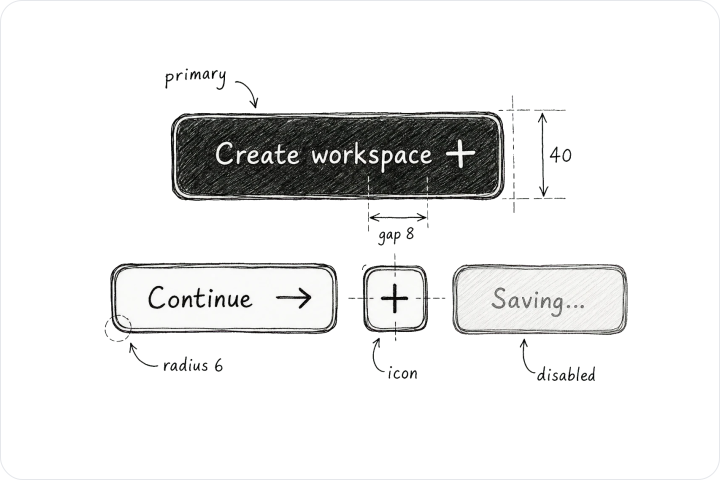
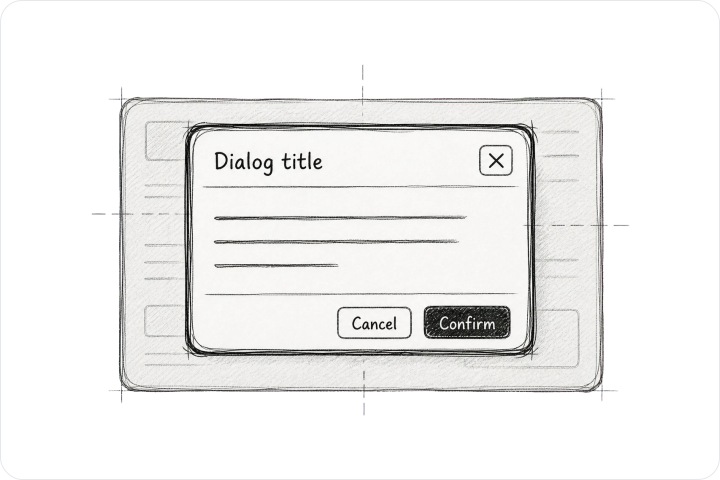
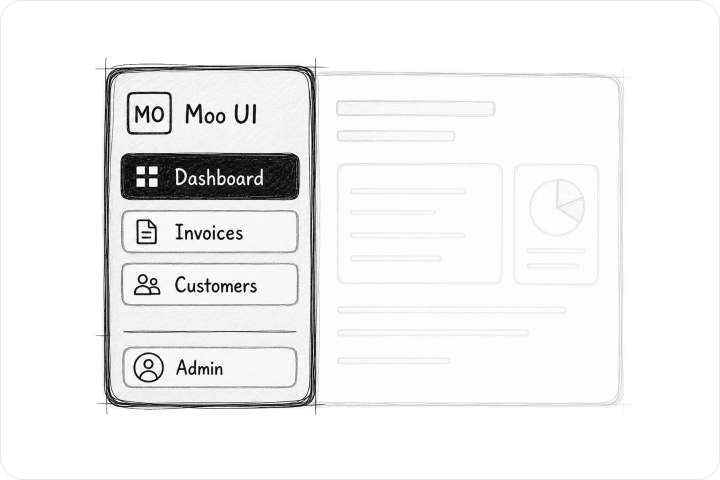
Moo UI is preparing the 1.0.0-rc.4 release candidate. Public exports, package boundaries, browser support, and release evidence live in Support & Evidence.
Complete release notes are on
GitHub Releases.
Small documentation corrections, reduced reproductions, accessibility checks, and bounded component improvements are welcome. The Contributing guide covers local development, project boundaries, workflow, and issue types.
Development setup and repository boundary notes live in the Contributing guide. Consumer install paths live in the Installation guide.
Moo UI source code is MIT licensed. License details live in LICENSE and the License page. Asset terms live in ASSET_LICENSE.md; dependency notices live in the version-pinned third-party notices.