bytekit is a C library for manipulating character arrays (strings) as sequences of bytes, where each address holds a binary value corresponding to a character in the ASCII table.
What is the difference between a character array and a character pointer?
Consider the following example:
char arr[] = "Hello World"; // array version
char *ptr = "Hello World"; // pointer version-
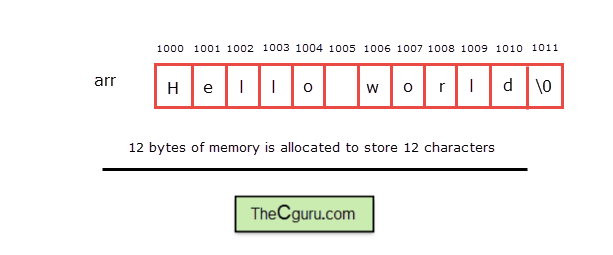
arris an array of 12 characters. When the compiler sees:char arr[] = "Hello World";
it allocates 12 consecutive bytes of memory and associates the address of the first byte with
arr.
-
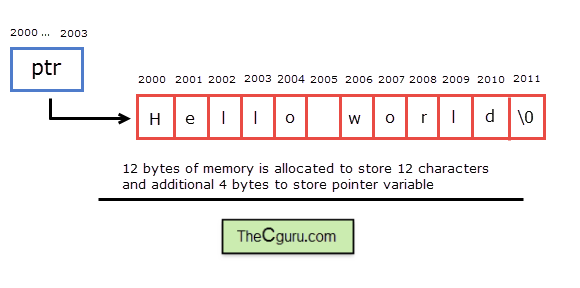
ptris a pointer to a string literal. When the compiler sees:char *ptr = "Hello World";
it allocates 12 bytes for the string literal
"Hello World"(in read-only memory) and extra bytes for the pointer variableptr. The pointer is assigned the address of the string literal.
In C, the name of an array points to the base address, but an array and a pointer are not the same:
- An array allocates storage for the data.
- A pointer just stores an address, which may point to a string literal (read-only) or to a buffer (modifiable).
This library provides the following functions for manipulating strings:
length: get the length of a string.equal: check if two strings are the same.copy: copy characters from one string to another.subcopy: copy a specific portion of a string, using the starting and ending index, to another string.subcopy_len: copy a specific portion of a string, using the length, to another string.subcopy_index_len: copy a specific portion of a string, using the starting index and the length, to another string.